One system instead of a pile of spreadsheets.
An order comes in by WhatsApp. Someone types it into the order sheet. The storeman types it again on the delivery order. Accounts types it a third time on the invoice. When the customer rings to ask where the goods are, the answer is in three places and one person’s head.
We build a simple ERP for small companies in Singapore. It replaces the spreadsheets with one system where orders, stock, jobs and invoices sit together and each detail is entered once.
Free discovery callHow the spreadsheets took over.
Each sheet was a sensible answer to one problem at the time. Then the company grew, and now the sheets have to be kept in step by hand. The one person who understands how they fit together cannot take leave.
The same order is typed into the order sheet, the delivery order and the invoice. The order is entered once, and the delivery order and invoice are produced from it.
Stock is whatever the sheet said the last time someone updated it. Stock moves when goods are received or delivered. There is no separate sheet to update.
To know where a job stands, you ring the supervisor or scroll the WhatsApp group. Each job shows its status, who is on it and what is outstanding, updated from a phone by the people doing it.
A finished job goes unbilled because the paperwork never reached accounts. Completed deliveries and jobs with no invoice stay on a list until someone bills them.
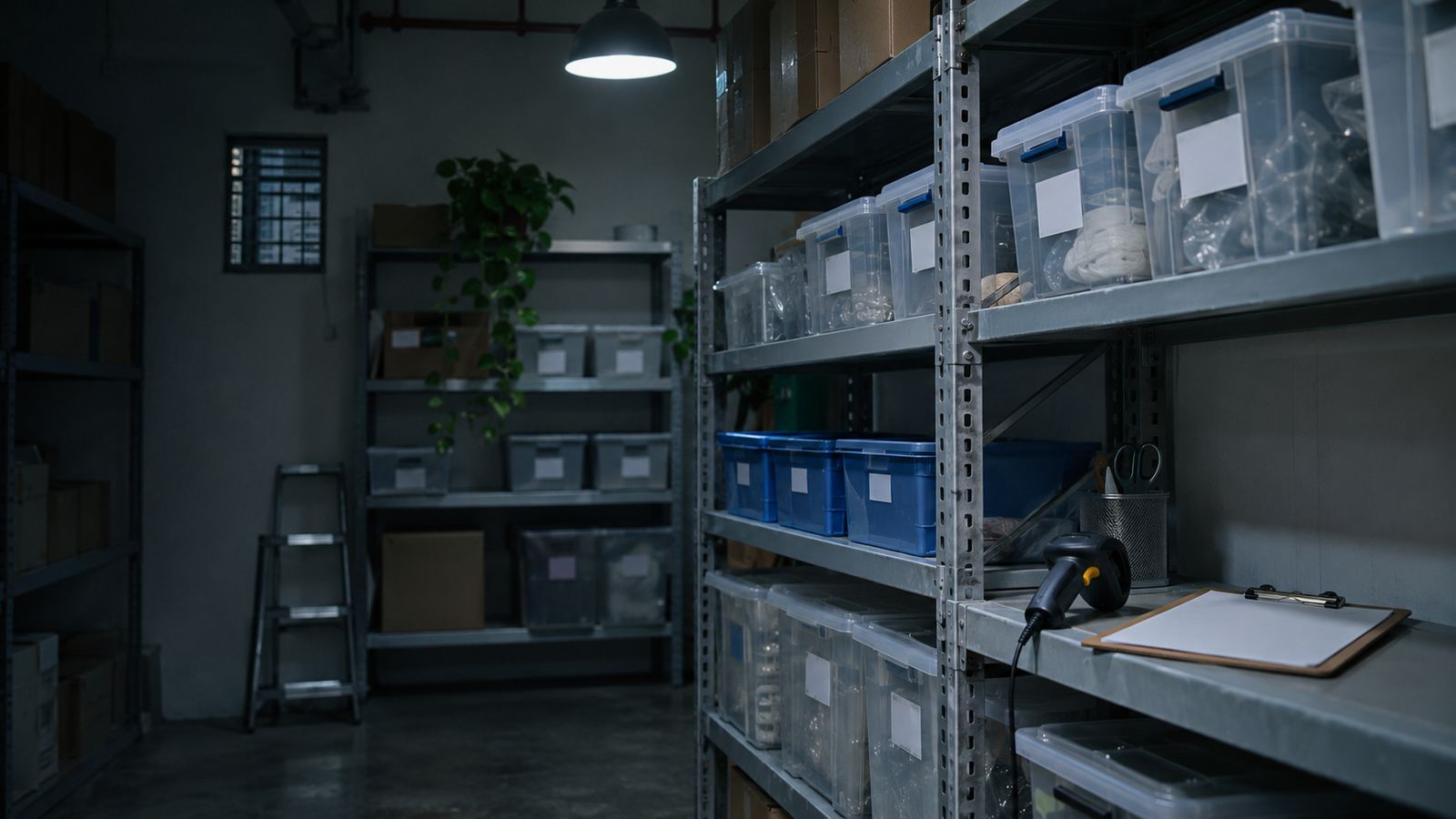
Entered once. Seen by everyone who needs it.
Sales, store, site and accounts work from the same record, each seeing the part that is theirs.
What we build.
We build around how your company already works, and keep the software you are happy with.
A map of your paperwork.
We follow one order from enquiry to payment and write down every sheet, form and message it passes through. That shows where things are typed twice and where they get lost.
Orders, stock, jobs and invoices.
The parts you need, built to fit your steps and your terms. If orders and stock are the trouble, we start with orders and stock.
Links to what you keep.
If your accounting software works, it stays. Where it can take them, invoices pass across automatically. We check before we promise it.
A screen for each role.
The storeman sees what to pick and what to receive. The supervisor sees today’s jobs on a phone. You see all of it: orders, stock, jobs and what is unbilled.
Your old records brought across.
Customers, items, prices and open orders are moved over from the spreadsheets and checked with your staff before the switch.
Straight answers.
Why not buy an off-the-shelf ERP?
If a packaged system fits how you work, buy it, and we will tell you so. We build when the packages would force you to change a process that works, or bury your staff in screens they will never need.
Will my staff actually use it?
Staff use a system when it is less work than the spreadsheet. We design each screen with the person who will use it, in their own words, and they try it on real orders before the old sheets are retired.
Do we have to switch everything at once?
No. We start with the part that hurts most and run it alongside the old way until you trust it. The rest follows in the order you choose.
Who sees our records?
We use only the records you choose to share, and only to build and run your system. Access inside the company is set by role, and you decide the roles.
How do we start?
With a free discovery call. Walk us through one order from start to finish. We then put the plan in writing: what we would build first, what stays as it is and how the two connect.
Type it once.
Tell us which spreadsheet everyone is afraid to touch. The free discovery call starts there.
Free discovery callWe also build AI enquiry replies Business data and reporting Websites Search and AI visibility